Control, Robotics, and AI for
Manipulating Physical Systems.
Launching Fall 2026.
The vision
We envision a world where robots plan their actions not simply by mapping them to their observations, but by reasoning about the physics of their environment.
For us, physical AI is not a solution but rather the problem of grounding artificial intelligence models in physics such that their outputs are consistent with the real world.
This will enable robots to scale way beyond their current capabilities and we are dedicated to unlocking this potential.
Success with require a deep integration of controls, robotics, artificial intelligence, and our group is positioned at the intersection of these fields.
Research Thrusts
- —Building models of robots, of their environments, and even of the human body.
- —Using physics-grounded algorithms to enable robots to pick and place objects intelligently.
- —Pushing the boundary of accuracy for dexterous manipulation tasks.
Our Environment
- —Ph.D. students at ÉTS pay the same tuition as Quebec residents (very low), regardless of nationality. The international surcharge is waived for full-time doctoral students.
- —Montreal is one of the world's most concentrated hubs for AI research and talent, home to industrial research labs alongside a deep pool of academic AI researchers across the city's universities.
- —Montreal is consistently ranked among the world's best student cities, offering a dense, thriving arts and culture scene and a bon vivant lifestyle — all while ranking among the safest major cities in North America and remaining dramatically more affordable than other major tech hubs.
- —We have a strong record on gender equality and LGBTQ+ rights: Quebec was the first Canadian province to allow same-sex adoption, Canada was the fourth country in the world to legalize same-sex marriage, and Quebec has the highest labor-force participation rate for women among Canadian provinces.
Led by
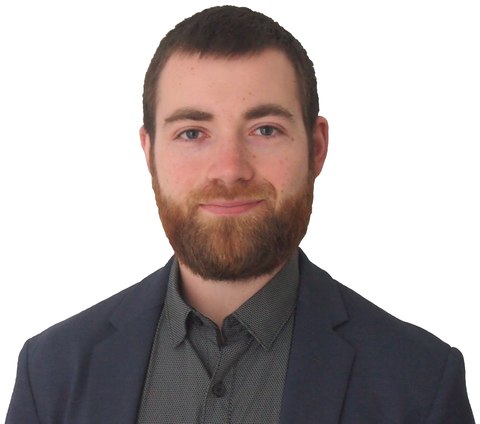
Dr. Philippe Nadeau
Professor, Department of Electrical Engineering
Dr. Philippe Nadeau is a professor in the Department of Electrical Engineering at the École de technologie supérieure and founding director of CRIMPS. He earned his Ph.D. at the University of Toronto in 2025 and was a Senior AI Developer on Vention's Physical AI team before returning to academia. His research develops physics-based algorithms that let manipulator robots perceive, plan, and reason about their environment to carry out assembly and handling tasks autonomously, with current work on robust object placement, continuous robot calibration, and physics-informed vision-language models for long-horizon planning.
Join us
If this vision resonates with you, come join us.
CRIMPS is recruiting PhD students with backgrounds in robotics, mechanical or electrical engineering, computer science, controls, or machine learning — motivated by the problem of getting a robot to reliably act in the physical world, not just perceive it. If you are an undergraduate student at ETS and are interested in joining the group, please contact us in person.